
Elon Musk’s orbital data centers could be an environmental catastrophe
Tens of thousands of satellites burning up on reentry might not be the best thing for the ozone layer.

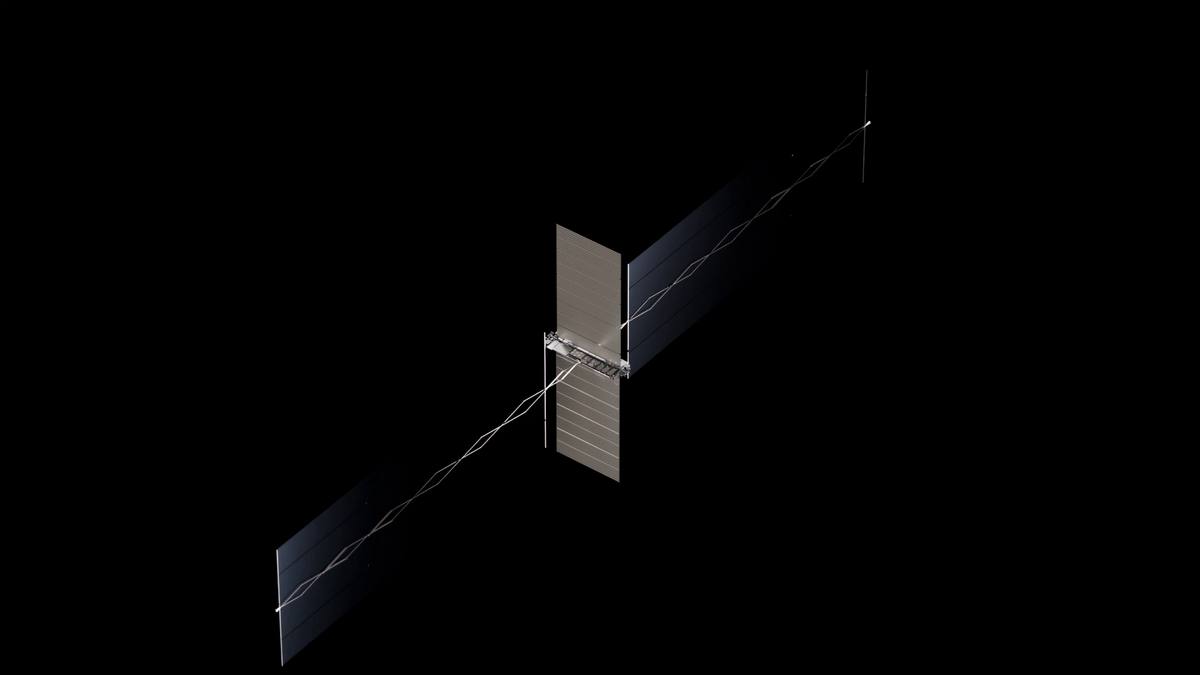
On May 29, SpaceX filed a response to the Federal Communications Commission (FCC) providing new details on Elon Musk’s stated plan to operate a constellation of one million AI data center satellites in orbit. The scheme to launch thousands of satellites per year to summarize your emails from space is economically preposterous, so the general reaction has been that pigs will probably fly before these satellites do.
But while a lot of attention has been paid to the logistics of launching these things, and on the incredible escalation of orbital traffic this would entail, less ink has been spilled on what would happen when they come back down. After all, data center GPUs running full-bore 24/7 burn out in a matter of years. And if any other component fails on the satellite, you can’t just walk up and fix it like it’s a server rack in some stone age building on the ground.
The new FCC filing includes the orbital altitude ranges SpaceX proposes placing satellites in (ranging between 550 and 1,000 km) and information on their proposed disposal plan. It says all satellites below 600 km would be de-orbited into the atmosphere. For the rest, it is requesting a waiver that would allow it to send some of them out into graveyard orbits, instead. About 200,000 of the million satellites are assigned to orbits below 600 km, making that the minimum number that re-enter Earth’s atmosphere when they hit end of life.
With a lifetime around 5 years, about 20% of the constellation would have to be replaced each year. That means somewhere between 40,000 and 200,000 of these data center satellites would burn up in the atmosphere each year.
The air up there
The environmental impact of satellite reentries isn’t well known, partly because it’s nearly impossible to collect any data from reentry events. But this question has gained the attention of researchers over the past few years, given the arrival of megaconstellations like Starlink that are about to begin raining down on the Earth in rapidly accelerating numbers.

Pollution occurs both on the way up—rocket emissions and reentry burn-up of any disposable stages—and on the way down when the satellite drops through the atmosphere. Different types of rocket fuel produce different emissions, but many release large amounts of atmosphere-warming black carbon particulate matter, for example. That can stay aloft high in the atmosphere for a long time, allowing it to have a much larger impact than black carbon emissions from surface activities.
On the way down, you have to consider what is released as somewhere between half and all of the satellite burns up—lots of aluminum, but also other metals and materials used in various satellite components. Aluminum is notable because it can deplete ozone by catalyzing chlorine’s familiar ozone-destroying reaction.
It’s not that we were unaware of this chemistry, but past research had found the numbers to be unimpressive based on the amount of orbital activity at the time. But as a 2021 paper on this topic notes, “When completed, Starlink will include about as many satellites as there are trackable debris pieces today, while its total mass will equal all the mass currently in [low Earth orbit]—over 3000 tonnes.”
(And as we’ll see in a moment, Starlink is like baby’s-first-satellite-constellation compared to the orbital data center plan.)
A 2023 study analyzed samples of the abundant sulfuric acid aerosol particles in the stratosphere, comparing the relative proportions of metals trapped inside them to spacecraft and to the meteoroids that naturally deliver material into our atmosphere as they burn up. Overall, they estimated that 10% of all these stratospheric particles currently contain aluminum and other elements that came from reentering spacecraft. As Starlink and other constellations ramp up to their full satellite counts, they projected that could increase to half of all particles.
Are we in the oh no zone?
A 2024 paper can help us relate this back to the AI data center satellites. That team modeled the process of a Starlink-sized satellite burning up on reentry. They estimated that a 250 kg satellite would release about 30 kg of aluminum oxide nanoparticles ready to deplete ozone. Given that, they estimate that satellites would have released about 2 metric tons of aluminum oxide in 2016, increasing to almost 17 tons in 2022. When megaconstellations like Starlink reach steady-state operation in the future, that number could be around 360 tons.
For comparison, the total amount of aluminum in small meteoroids entering Earth’s atmosphere each year is about 140 tons—the amount oxidized into similar nanoparticles would be some fraction of that.
If we use these numbers as a rough estimate—30 kg of aluminum oxide particles from a 250 kg satellite—we can scale it up to the proposed AI data center satellites. Each of SpaceX’s “AI1” satellites are expected to come in around 6 tons. (See Eric Berger at Ars Technica for the working on that. Although Elon Musk also helpfully noted that they are “very, very tiny compared to Earth.”) That would mean 720 kg of aluminum oxide nanoparticles released per satellite. With 40,000 to 200,000 of these satellites reentering Earth’s atmosphere each year, we’re talking 29,000 to 144,000 tons per year.
Because these particles are so small, and they are released so high, their lifetime in the atmosphere would be considerable. That same 2024 study noted that it would take around 30 years for this aluminum oxide to settle down into the stratosphere where the ozone layer is found. (And it would similarly take a long time to wash out of the stratosphere and settle to the surface.) So by the time we begin experiencing the effects of this pollution, we’d be locked into several more decades of impacts caused entirely by past activities.
How strongly would this affect ozone? That’s unclear. Research is still needed to quantify this and combine it with temperature and circulation changes caused by aluminum oxide, along with the consequences of all the other pollutants involved. One commentary in Nature on smaller satellite megaconstellations like Starlink said that “the resulting atmospheric aluminium input could be considered an uncontrolled geo-engineering experiment.”
The good news is that this orbital data center scheme seems very likely to be just another thing Elon Musk makes wild claims about that will never happen. The bad news is that the megaconstellations growing right now are definitely happening, and with poorly understood consequences.
The Montreal Protocol that successfully phased out many ozone-depleting chemicals, stabilizing ozone loss, doesn’t cover aluminum oxide produced by spacecraft reentries. It seems we need to figure out whether that’s a problem.