
Notebook: flow batteries, 3D printed water cooling, and West African floods
Each post from the Notebook includes short summaries of several recent studies or other news items.

Each post from the Notebook includes short summaries of several recent studies or other news items.
Flow gain in the membrane
Flow batteries are weird. Instead of using a conductive electrolyte to help shuttle energy from the cathode to the anode, it's the electrolyte that stores the energy. A membrane separates the electrolyte on either side, acting as a bouncer that only lets certain things cross over. An effective bouncer is the key to the whole system.
In vanadium flow batteries, for example, it's important that only protons can slip through the barrier—that's how it charges and discharges—keeping the vanadium ions and the water they swim in separated. Let either through, and the batteries ability to store energy rapidly degrades.
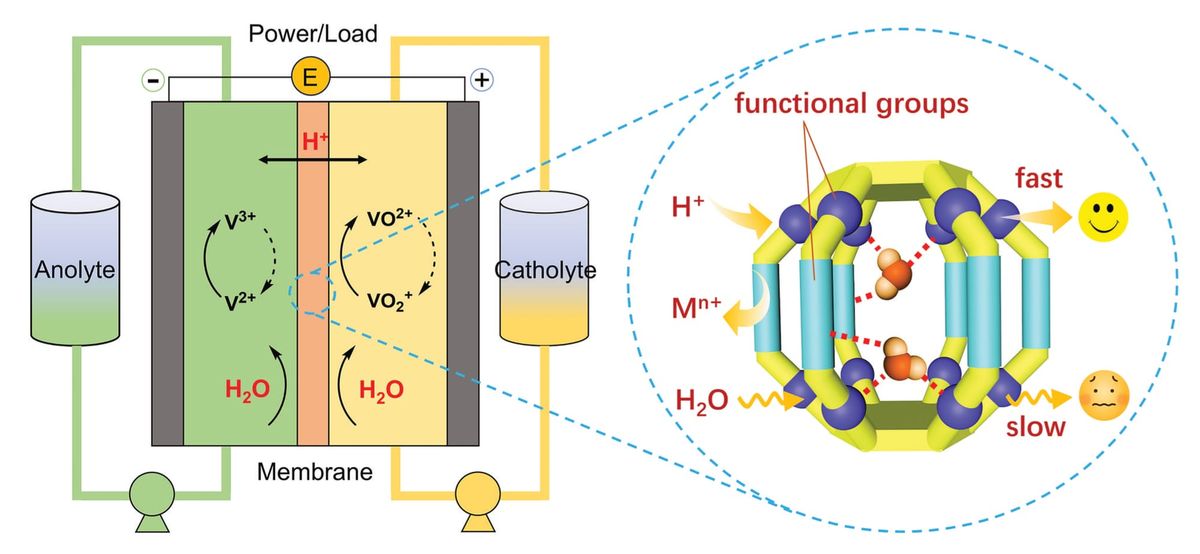
A study in Chem demonstrates a new membrane, with the proton pathways provided by a structure called a superphane cage. It looks a bit like one of those cat toys where you can see the bell trapped inside a ball. But in this case, the goal is to keep water and vanadium trapped outside the ball. Tiny little protons can zip right through the slots in the cage.
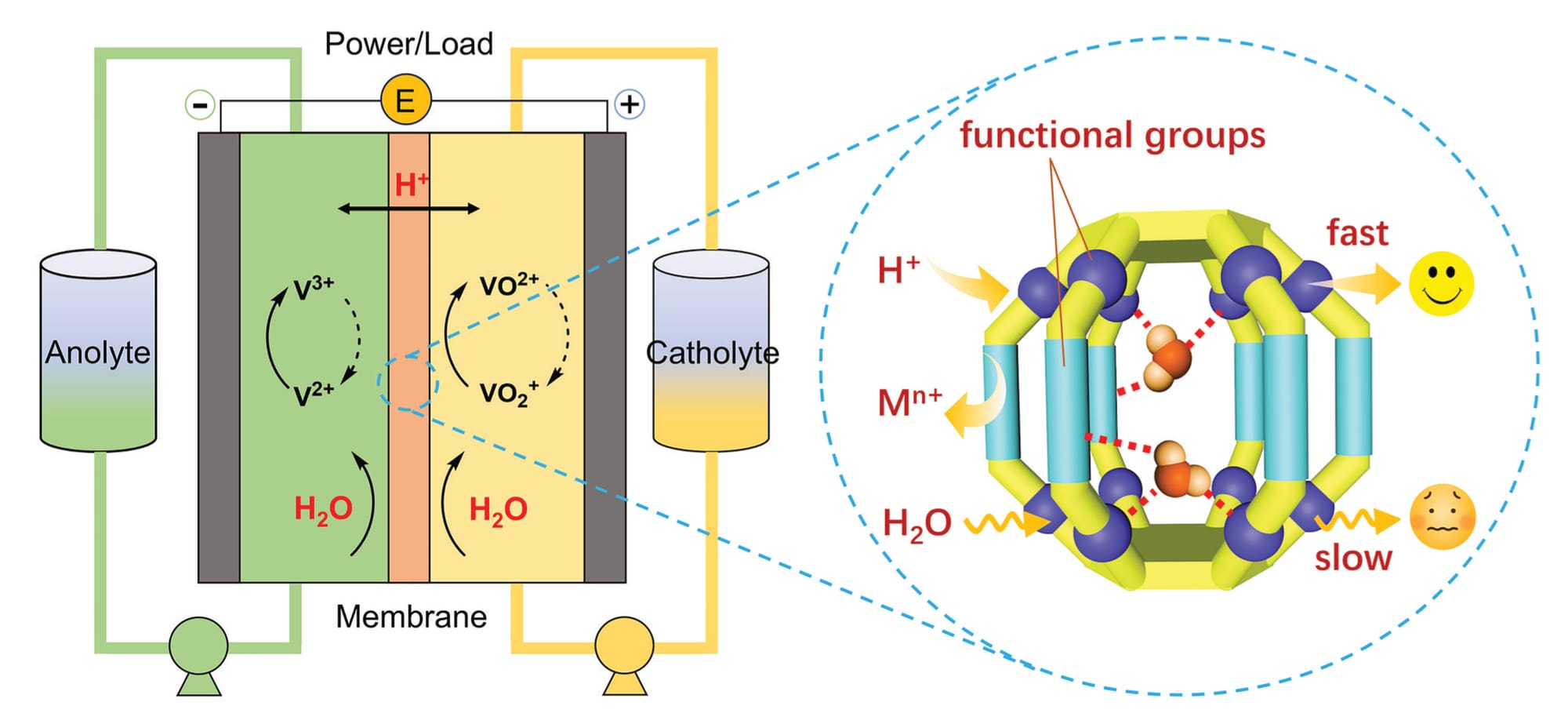
Embedding particles of this material within an otherwise impermeable sheet of a polymer commonly use to make these membranes, the researchers put it to the test in a vanadium flow battery. It beat standard membranes by losing just 0.008% of battery capacity per charge cycle, compared to about 0.15% loss per cycle—the benefits of a better bouncer.
Flow batteries have interesting applications for grid energy storage, partly because they are so different from lithium (or sodium) batteries. Dropping in an improvement like this could give the economics a boost.
Terawatt-copper army
Regardless of what happens after the AI bubble pops, data center energy use is quite significant. In 2023, it accounted for 4.4% of all electricity use in the United States. Almost half of a typical data center's energy use goes to cooling, as (like any computer) the server racks generate a lot of heat.
This is often done by moving cool air through the server room, and that cool air is often produced by evaporative cooling systems that consume large amounts of water. But just as a personal computer can be cooled by a water loop, server systems can be cooled by pumping water through heat exchangers directly mounted to each CPU or GPU die. And in the case of a data center, this can be more energy efficient than air cooling. (This water circulates in a closed loop, but the overall water consumption depends on how that loop is kept cool.)
The heat exchanger on each chip is called a cold plate. A recent study in Cell Reports Physical Science developed a wild new design for that cold plate that greatly reduces the energy needed to push cooling water through the loop.
A cold plate generally looks like other types of radiators, with linear fins or a grid of pins facilitating the rapid transfer of heat from the hot thing to the cold fluid passing through. The researchers realized that new technology for 3D printing copper could allow them to go behind cutting straight fins or simple pins, producing funky shapes that might work even better.

They let a simulation model test out all kinds of different shapes, iterating until it found the most effective combination. The result looks like a miniature Terracotta Army. (Do you see what I did with the title now? ...Do you hate it?) These complex shapes do two things: maximize heat transfer out of the copper, and minimize the energy needed to pump water through the cold plate.
Compared to a cooling plate cut into a grid of square pins of similar sizes, this design reduces water-pumping energy by 60-98%. So that would mean far less energy than it takes to push air through a cooling system. At that point, it might not matter how expensive it is to 3D print these things, as they'd pay for themselves pretty quickly in energy efficiency.
West African floods and climate change
In late June, torrential rains fell along the coast in Togo, Ghana, and Côte d'Ivoire, leaving almost 100 people dead. After an extended stretch of rainy weather, three days of heavy rain led to extensive flooding. Some locations saw over 140 millimeters (5.5 inches) in under a day.
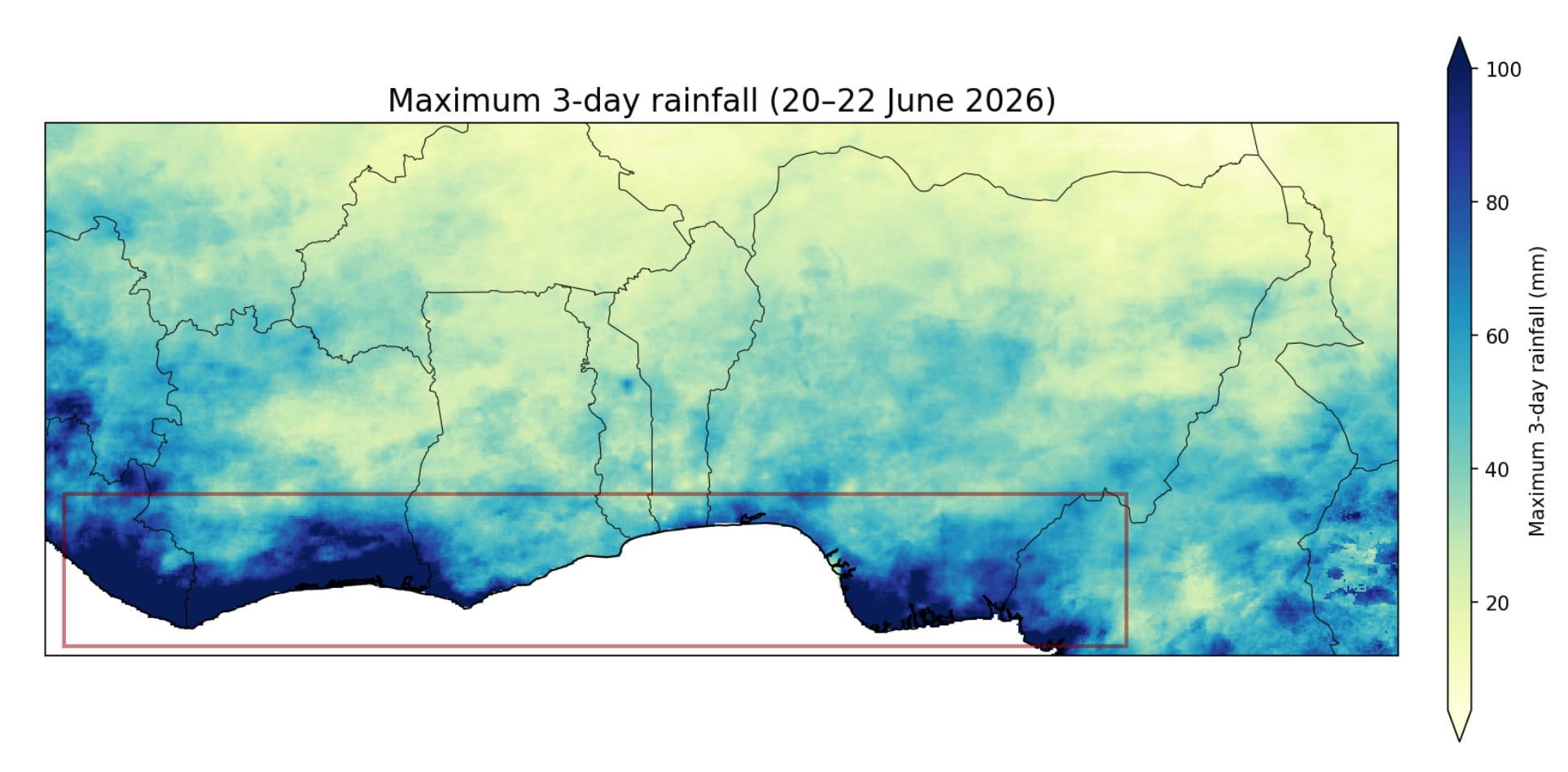
The World Weather Attribution group has released their rapid analysis of this event in the context of climate change. These analyses always compare historical data to climate model simulations with and without human-caused warming, estimating the role of climate change in extreme weather like a particular event.
The historical trend here is pretty large. Three-day rain totals like this have increased by about 23%, and are now about 5 times as frequent. We can currently expect a rain event like this to occur every few years in this area, on average.
Climate models struggle to match past patterns in this area, generally. The models averaged about 4% higher three-day rain totals, and a 20% increase in the frequency of an event like this, compared to a 1.4 °C cooler world. So while we can say we would expect extreme rainfall to increase here due to climate change, the team couldn't confidently estimate how much of a role it likely played.
(This is a good example of something described in a new US National Academies of Science report on the state of weather attribution research—results are often limited in the Global South due to poor data coverage. You can read about this report over at Ars Technica.)